Meeting Situations and Narrow Roads on the Isle of Wight
Driving Lessons in Ryde & across the Isle of Wight
Automatic and Manual Driving Lessons
Friendly & Patient Driving Instructors
⭐️⭐️⭐️⭐️⭐️ Rated 5/5 On Google by local learners
Grade A DVSA-Approved Driving Instructor
When the Road Gets Tight, Stay Calm and Think Ahead
On the Isle of Wight, it’s very common to find yourself driving on narrow roads, tight bends, or lanes with parked cars on both sides.
These “meeting situations” — where you and an oncoming vehicle can’t both fit through — are a key part of your learning journey and your driving test.
The key to handling them safely is forward planning, awareness, and patience.
When you plan ahead and stay calm, you’ll find these situations much easier than they look.
What Is a Meeting Situation?
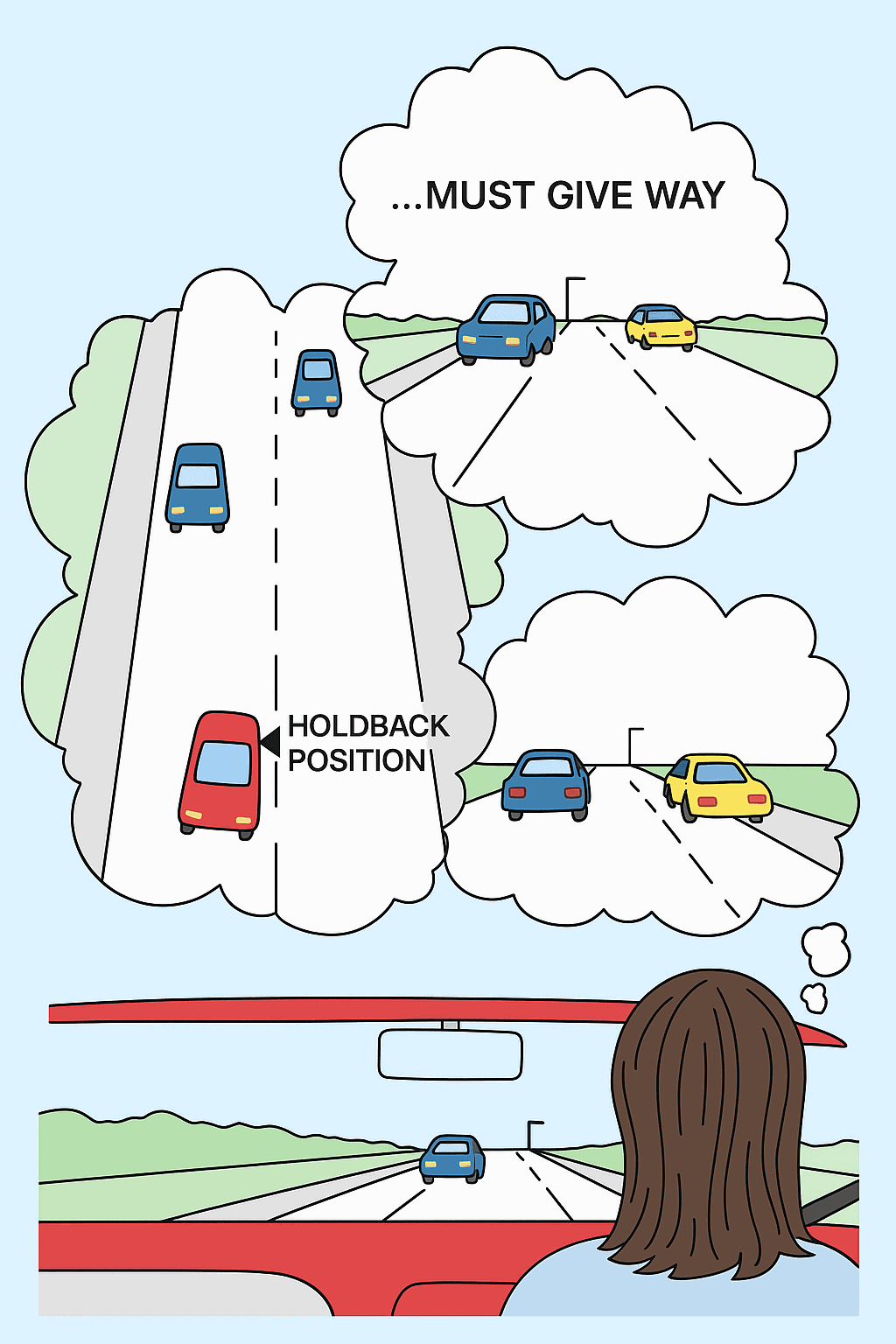
A meeting situation happens whenever two vehicles travelling in opposite directions meet on a road that isn’t wide enough for both to pass safely at the same time.
This could be:
- A narrow village road in Brading or Godshill
- Parked cars lining the street in Ryde or Cowes
- A single-track lane in Arreton, Calbourne, or Freshwater
Your job as a driver is to judge:
- Who has priority
- Whether there’s space to pass safely
- When and where to give way
Who Has Priority?
The basic rule is simple:
👉 The driver with the obstruction on their side of the road should usually give way.
That means:
- If the parked cars or obstructions are on your side, you should stop and let the other driver through.
- If the obstructions are on their side, they should let you through.
However, use common sense and courtesy — if the other driver is already moving through, let them continue. Examiners want to see that you can assess each situation calmly and make safe, polite decisions.
How to Approach a Meeting Situation
Here’s the safe routine to follow:
- Look Well Ahead
Spot potential narrow sections early — especially around bends or parked cars. - Check Your Mirrors
Know what’s behind before slowing down or stopping. - Decide Early Who Should Give Way
Don’t leave it to the last second — plan your move while you still have space. - Choose a Safe Place to Stop
Pull in beside a gap, driveway, or passing place. Avoid stopping opposite other parked vehicles. - Communicate Clearly
Slow down, make eye contact if possible, and use gentle gestures to show courtesy.
Don’t flash your headlights — that can be misinterpreted. - Pass Slowly and Smoothly
Keep your speed low, stay close to your side, and be ready to stop again if needed.
When to Give Way
You should give way if:
- The obstruction is on your side of the road.
- The oncoming car is already halfway through the gap.
- The other vehicle is larger (like a bus or lorry) and needs more space.
- You’d have to squeeze through or mount the kerb to continue.
It’s always safer to wait than to take a risk. A short pause shows confidence and control — not hesitation.
Using Passing Places
In rural areas like Brighstone, Arreton, or Shalfleet, you’ll often see passing places on single-track roads.
How to use them:
- Look far ahead for oncoming vehicles.
- If a passing place is on your side, pull in and wait.
- If it’s on their side, wait opposite it so they can use it.
- Be prepared to reverse carefully if needed — examiners love to see calm reversing under control.
Always give a polite nod or small wave to thank the other driver for waiting.
Common Mistakes to Avoid
1. Rushing or Trying to “Beat” the Other Car
→ Take your time — it’s not a race.
2. Stopping in an Awkward Spot
→ Don’t block junctions or bends; choose a clear gap instead.
3. Driving Too Close to Parked Cars
→ Leave enough space in case doors open or people step out.
4. Forgetting to Check Mirrors Before Stopping
→ Always know what’s behind — you might have a car following you closely.
5. Hesitating Too Long
→ Once it’s clearly safe, move off confidently to keep traffic flowing.
Local Isle of Wight Examples
- Ryde High Street: parked cars on both sides — practice early planning and clear decisions.
- Newport side streets: tight gaps where cooperation is key.
- Rural lanes near Arreton or Shorwell: use passing places and anticipate hidden vehicles around bends.
- Tourist routes (summer months): expect larger vehicles and patient driving.
Your instructor will guide you through all of these — helping you build real experience and judgment.
How Examiners Mark Meeting Situations
During your Isle of Wight driving test, the examiner will watch for:
- Early observation and decision-making
- Smooth, controlled use of speed
- Safe use of mirrors and positioning
- Courtesy and communication with other drivers
- Confidence without aggression
If you show that you can plan ahead, give way politely, and move through safely, you’ll earn strong marks in both observation and control.
How Humphreys Driving School Helps
At Humphreys Driving School, we’ll help you master meeting situations on the Isle of Wight’s unique mix of roads — from town centres to narrow country lanes.
You’ll learn how to:
- Read the road early and plan ahead
- Judge safe passing distances
- Use passing places and gaps with confidence
- Handle reversing safely when needed
- Stay calm when roads get tight
Our patient, structured approach will help you feel completely in control — even when space is limited.
Ready to Master Narrow Roads and Meeting Traffic?
Confidence comes with practice — and the Isle of Wight is the perfect place to learn these real-world skills.
Apply for your first provisional driving licence here: DVSA
👉 Book your driving lesson today and start learning how to handle meeting situations calmly, safely, and confidently with Humphreys Driving School.
Please leave a message and we’ll contact you back