How to Use Car Gears
Learn to Drive in Ryde with Confidence
Automatic and Manual Driving Lessons
Friendly & Patient Driving Instructors
⭐️⭐️⭐️⭐️⭐️ Rated 5/5 On Google by local learners
DVSA-Approved Driving Instructor
Learning how to use car gears correctly is an essential skill for learner drivers. Understanding when to change gear and how to control the gear lever will help you drive smoothly, safely, and confidently.
🔢 The Purpose of Gears
Gears control the power and speed of your car.
- Lower gears (1st & 2nd) give more power and are used for moving off, slow speeds, manoeuvres, and hills.
- Higher gears (3rd, 4th, 5th, and sometimes 6th) are used for building speed, cruising, and fuel efficiency on open roads and dual carriageways.
🚗 When to Use Each Gear
| Gear | When to Use |
|---|---|
| 1st | Moving off, very slow traffic, parking, steep hills |
| 2nd | After moving off, slow turns, slopes |
| 3rd | Building speed in town, gentle bends |
| 4th | Around 30–40 mph, open roads |
| 5th / 6th | Higher speeds (50+ mph), dual carriageways, fuel efficiency |
💡 Tip: Staying in a low gear too long strains the engine and wastes fuel.
✋ How to Hold and Use the Gear Lever Properly
Using the gear lever correctly helps you change gears smoothly and avoid selecting the wrong gear.
✔ How to Hold the Gear Lever
- Hold the gear lever lightly, not tightly
- Use the palm of your hand, not a full grip
- Guide the gear lever — don’t force it
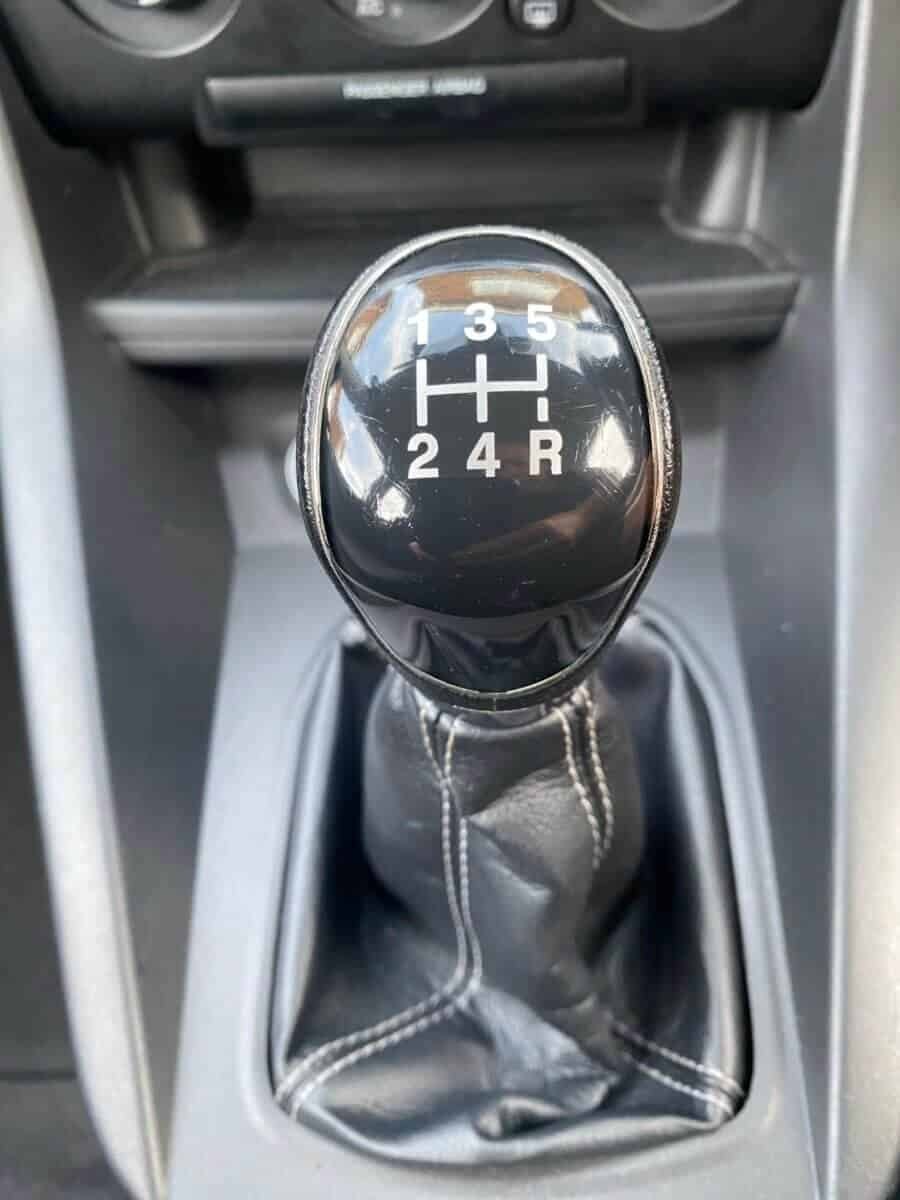
➡️ Gears 1 and 2 – Push to the Left
- Place the palm of your hand on the right-hand side of the gear lever
- Gently push the lever to the left, then:
- Forward for 1st gear
- Back for 2nd gear
This reduces the risk of selecting the wrong gear.
⬆️ Gears 3 and 4 – Let It Spring Back
- After changing out of 1st or 2nd, release sideways pressure
- The gear lever will spring back naturally to the centre
- From the centre:
- Forward for 3rd gear
- Back for 4th gear
💡 Let the gearbox guide you — don’t force it.
➡️ Gear 5 – Over to the Right
- Place the palm of your hand on the left-hand side of the gear lever
- Gently push to the right, then forward into 5th gear
- Only select 5th when your speed is suitable
⬆️ Changing Up Gears (e.g. 2nd → 3rd)
- Check mirrors to be aware of traffic behind
- Accelerate smoothly
- When the engine sounds louder or reaches around 2,000–2,500 RPM:
- Lift off the gas
- Press the clutch fully down
- Change up a gear
- Ease the clutch up smoothly while reapplying gas
⬇️ Changing Down Gears (e.g. 4th → 3rd)
- Check mirrors first
- Slow down using the brake
- When the car needs more power:
- Press the clutch
- Select the lower gear
- Bring the clutch back up smoothly
📌 Use engine braking when appropriate, such as approaching junctions, roundabouts, or corners.
🧠 Practice Makes Perfect
- Check mirrors before every gear change
- Listen to your engine
- Match the gear to your speed
- Let the car guide you — don’t rush
With practice, gear changes will become natural and automatic.
If you ever feel unsure, don’t hesitate to ask during your next lesson — we’ll go over it together.
🚘 Humphrey’s Driving Lessons
Helping you drive with confidence, control, and care.
Call now: 📞 07840 313390
Apply for your Provisional driving Licence Here: DVSA
Send an Enquiry
Or, fill in the form below. Providing your post code helps me check my availability in your area so I can suggest possible lesson slots when I contact you.
Driving Lessons Across the Isle of Wight
Humphreys Driving School is based in Ryde but covers towns and villages across the island.
Ryde, Brading, East Cowes, Newport, Sandown, Shanklin, Seaview, St Helens Wootton Bridge, Ventnor, Bembridge